A brand can't be louder than the founder behind it is willing to be. When a founder holds back, softening her opinions, waiting until things are perfect, staying behind the logo, the brand goes muted with her. People can't remember a point of view you never share, and they can't refer someone they can't describe. Meanwhile the feed, and now the AI tools, fill the gap with a flatter, more generic version of you. The fix comes in two parts. First, build a brand that sounds like you, so showing up stops feeling like a performance. Then show up in your real voice now, and refine it in public instead of waiting for perfect.
The short version
- A brand can only go as far as the founder is willing to be heard.
- Holding back usually looks responsible: polishing, waiting, softening. It still costs you.
- Build the brand first so showing up is easy. Then ship before it's perfect and refine as you go.
What holding back actually looks like
Most founders I meet aren't short on vision. They're holding back, and it rarely looks dramatic. It looks like:
- Softening an opinion before anyone has pushed back on it.
- Waiting to post until the website is done, the photos are done, the offer is perfect.
- Keeping your prices where they are because raising them feels like a lot.
- Saying yes to work that doesn't fit, so nobody's disappointed.
- Letting the logo do the talking and keeping your own face and name out of it.
Every one of those feels sensible on its own. Together they make a muted brand.
What a muted founder costs the brand
People remember people. They remember a sentence you said, an opinion they disagreed with, the way you explained something. They don't remember a logo with a nicely written services page.
So when you hold back, the brand loses the one thing nobody else has. And the space doesn't stay empty. Other people describe you, your competitors set the terms, and AI tools summarize you as "a brand strategist in the Netherlands" or whatever the category average is. Every week you wait, something else fills the gap with a flatter version of you.
A muted founder can't build a brand people remember.
Your voice isn't too much
A lot of us were taught to keep rooms comfortable. Pad the idea with qualifiers. Leave space for interpretation. Ask "does that make sense?" at the end of a point that made perfect sense.
And I'll say this from watching it many times: when one woman in the room stops doing that and says the plain thing in her plain voice, you can see the other women sit up. She didn't just make her point. She changed what's allowed in that room.
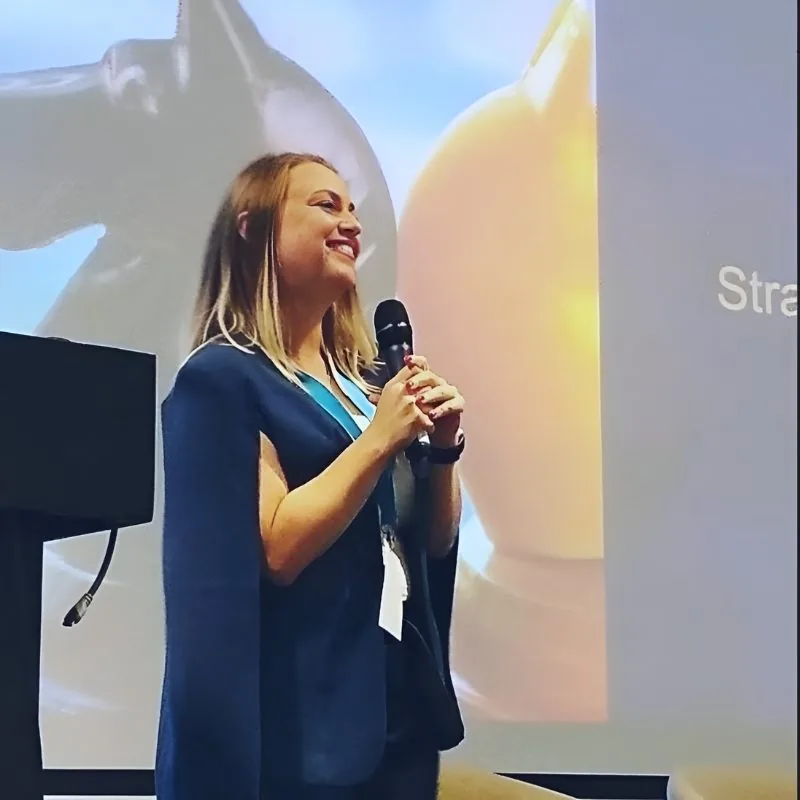
I've felt the other side of it, too. I was on a live webinar in front of a lot of people and I felt real nerves, which is not like me. My first instinct was to push through and perform my way past it. Instead I named it, just to myself, gave it two honest minutes.... and then, almost like a switch: oh hell, this is fun. I was in my zone for the rest of the hour.
Naming the nerves is what made them go.
You don't need perfect conditions
I start a lot of things, and I'm not always sure I'll finish them. Build the plane while flying, that's me. So when I wrote my book, I told nobody. I wrote it at the kitchen table between client calls, moved the launch date four times, printed it, redlined it, cut from it. My own family didn't know until it was nearly finished. It went live on my birthday, October 12, 2026.
Was it perfect when it shipped? No. It was done, and it was mine, and that turned out to matter a lot more.
Same with this website. Same with plenty of the systems I've built mid-project. You can start messy and improve where people can watch. In my experience, people trust the version with a few rough edges more than a perfect one that took three years to arrive.
How to stop holding back
1. Build the brand first, so showing up is easy. Most founders hold back because the brand doesn't sound like them, so every post feels like wearing a costume. Fix that and showing up gets lighter. (More on that in A brand should sound like the woman behind it.)
2. Write down your owned lines. Three or four sentences you believe, in your words, that you'd happily say a hundred times. That's your material.
3. Pick a rhythm you can keep. Steady beats rare and perfect. One honest post a week you can sustain is worth more than a burst you'll abandon in a month.
4. Ship the rough version. The post, the offer, the page. Show the first version, then show the fix. Name what you learned.
5. Keep the spine, soften the delivery if you need to. Being heard doesn't mean being harsh. You can say a strong belief warmly. Just don't water down what you mean. (See Why so many brands sound like everyone else.)
Showing up doesn't mean oversharing
To be clear on the boundary: this is about presence. You don't have to share your hard years, post every day, or perform anything for attention. A reserved founder with a clear point of view, said steadily, is far easier to remember than a loud one with nothing to say. Showing up is the leadership move. How loud you are while doing it is up to you.
Where to start this week
- Write the opinion you've been softening. The full-strength version. Post it, or say it to one client, and see what happens.
- Pick one thing you've been waiting to perfect. Set a date this month to ship the rough version.
- Write your three owned lines on a sticky note where you work.
If the reason you hold back is that your brand doesn't sound like you yet, that's exactly what the brand build at OG Solutions fixes. → Brand development
FAQ
Why should a founder be the voice of her brand?
People remember people. A founder's own point of view, stories and way of explaining things are the parts of a brand nobody else can copy. When the founder holds back, the brand loses what makes it memorable and referable.
How do I stop holding back as a founder?
Brand strategist Gina Dunn recommends building a brand that sounds like you first, so showing up stops feeling like a performance. Then write down a few lines you believe, pick a rhythm you can keep, and share rough versions instead of waiting for perfect.
Do I have to be perfect before I show up?
No. Shipping an honest first version and improving it in public builds more trust than waiting for perfect conditions. Gina Dunn wrote and launched her book The Clarity Signal while moving the launch date four times.
Does founder presence mean posting every day?
No. Presence means sharing a clear point of view steadily, at a rhythm you can keep. It doesn't require oversharing, daily posting or a loud personality.